
Agriculture and Climate: What’s Not Being Said
Reflections from RIPE’s Executive Director
RIPE was founded to scale voluntary conservation practice adoption on working lands by empowering producers. We catalyze farmers and ranchers to create improved and equitable enabling conditions to adopt such practices. In RIPE’s earliest years, we leaned into emerging new federal policy and funding to address climate change as an opportunity to achieve our mission. As the organization has grown and political winds have shifted, our approach has evolved beyond a singular focus on climate. However, supporting voluntary efforts on working lands to mitigate and slow the effects of growing weather volatility and other effects of climate change remain mission critical for RIPE.
New York Climate Week is one of the most meaningful events to attend for those working to address what is arguably our most wicked environmental problem. So logically, it is important for RIPE to be present, and to engage with those working on the issue in the agriculture and food space.
This year, I had the honor of representing RIPE at New York Climate Week along with RIPE President, Alana Petersen. We were joined by over 120,000 people from 78 countries who attended more than 1,500 different events during the last week of September. RIPE focused on attending key events and meetings centered around actions that impact farmers and ranchers. And for other related ag events RIPE Leadership couldn’t formally attend, RIPE coalition members and friends did.
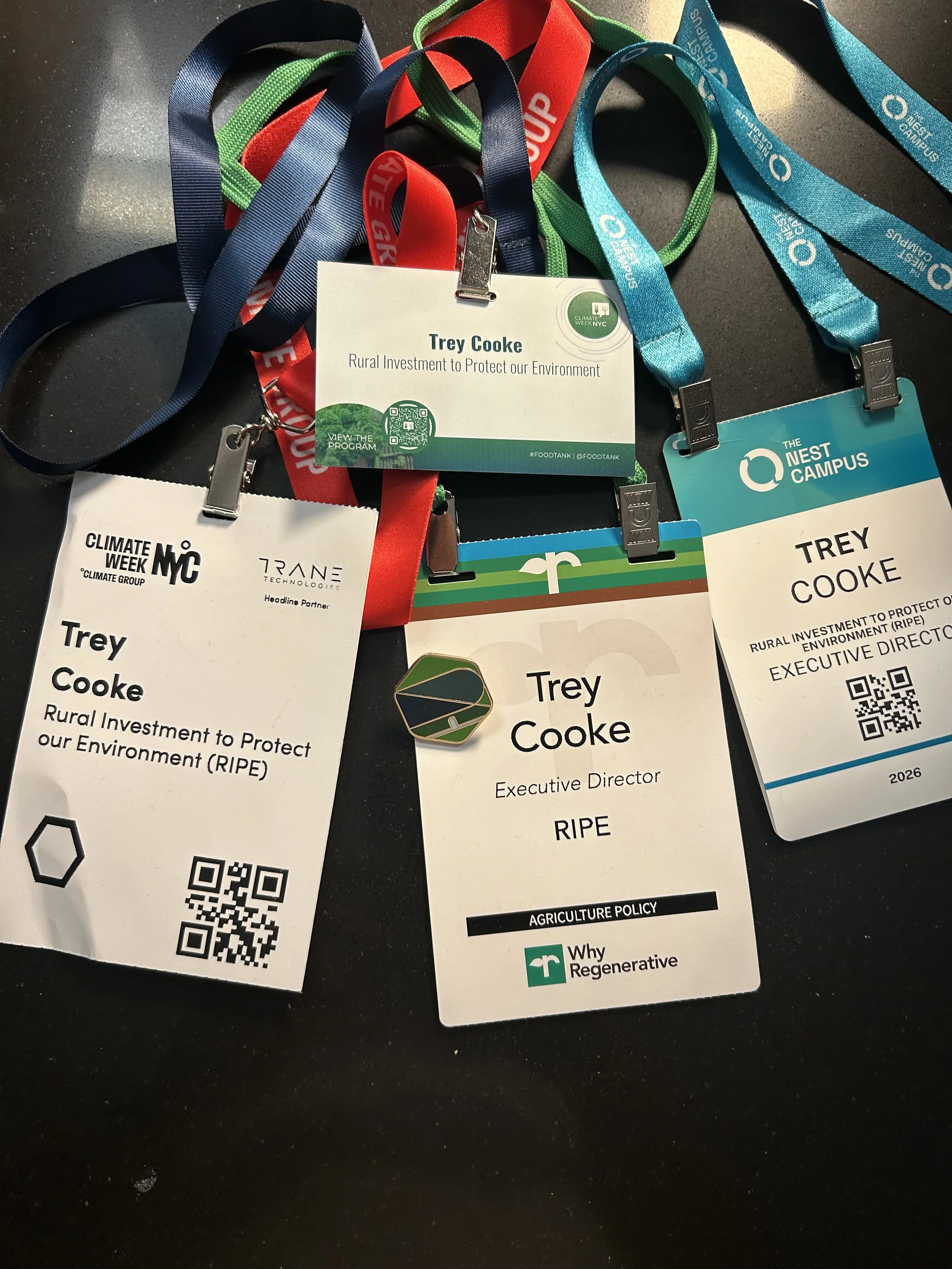
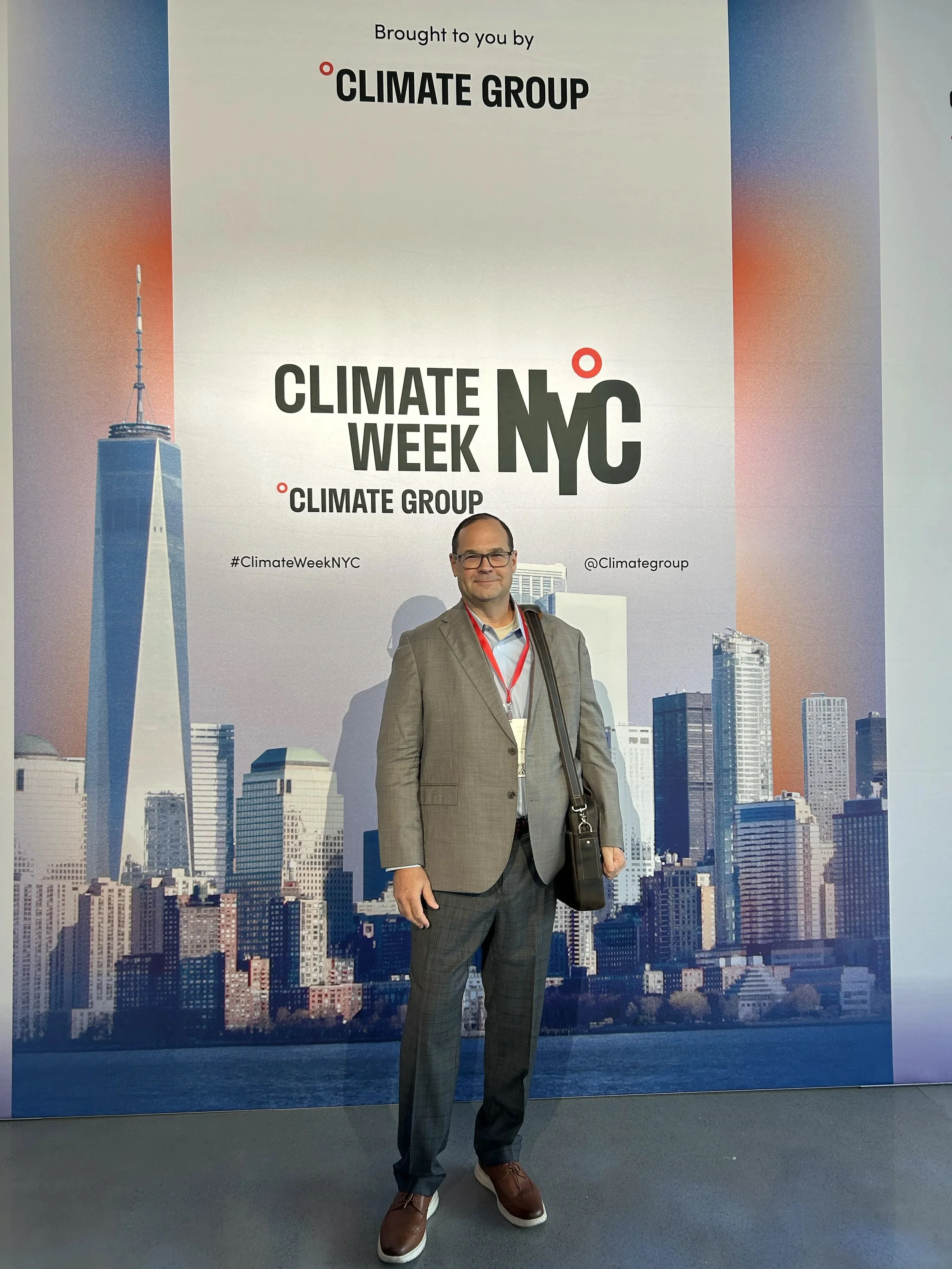
Post New York Climate week, I’ve enjoyed reading all of the reflections of participants, speakers, and hosts. They have been numerous and all accurately reflect what was discussed. Those who know me know that this does not motivate me to do the same. But, I have been thinking a lot about New York Climate Week, and wish to share my reflections of what was not adequately discussed in New York, or at least what was not discussed to my satisfaction.
There were three constant themes underscored by almost every event related to the agricultural supply chain and food events at Climate Week. The first was the critical need for innovative financing of regenerative food production systems; another focused on advancing the production and delivery of healthier foods to consumers; and the last included growth in ecosystem service markets. RIPE perceives all as critically important efforts, because private market support is mandatory to help overcome the financial risks assumed by farmers and ranchers transitioning towards more sustainable and healthier food production systems. As important as these themes may be, several major topics didn’t seem to get the attention they deserved.
Creative loan mechanisms, innovative crop insurance strategies, better prices for regeneratively-grown commodities, and incentives generated by ecosystem service markets were discussed at length. But most of these strategies still pass the financial burden back to the producer or a limited few customers who can afford to buy premium products in the grocery store. This was supported by a comment I heard during one event suggesting the ROI for these approaches rapidly diminishes the further you go from the center of the food supply chain, with farmers at one end and consumers at the other.
I want to be clear, these strategies move the needle and are a critical part of the solution, but without strong and supporting public policy, farmers and ranchers will not be able to scale change across the whole of U.S. agriculture on their own. Scaling depends on our ability to strategically link private market support and public policy to drive this movement. U.S. farm policy was discussed in New York, but there was very little conversation about how to cover the full cost and liabilities assumed by farmers and ranchers transitioning from conventional production systems to more sustainable, climate-friendly, regenerative systems.
I have worked with farmers my entire career, and in my current role as RIPE’s Executive Director, I listen to the will and wishes of our Coalition, which represents over 300,000 producers across the United States. From my own lived experience, it is abundantly clear that farmers and ranchers are willing to take the necessary steps, if it works on their balance sheet. This was echoed by one Climate Week participant from the farm credit industry saying, “Farmers are the most pragmatic decision makers in all of business, if it makes sense….they do it…and this isn’t making business sense to the majority of producers right now.”
Scaling change is critical if we are honest in our wishes to empower farmers and ranchers to help address some of our most critical environmental needs like climate, water quality, and water supply. In addition to advancing private market support for wholesale transitions towards conservation agriculture through a voluntary approach, without loss of production for food security, radical changes are necessary in public policy. This is the conversation that needs to be held at the highest levels as it is the only way we are to find an equitable approach to creating necessary enabling conditions for all farmers and ranchers, growing all commodities at all scales throughout the United States.
Another opportunity to strengthen future dialogue regarding these efforts includes amplifying the voices of those who must do the work behind the farm gate to generate the benefits we all want to see. There were farmers and ranchers attending Climate Week, but most were what I consider early adopters and innovators, sharing stories about their success in transitioning. These stories are motivating, and demonstrate what can be done - but scaling conservation in a meaningful way will take more than success stories and wishful thinking. This movement depends on the input, ideas and ultimate buy-in by those who have yet to make a major move to improve their own environmental stewardship. Because of obstacles that include financial uncertainty and that of current private markets and public policy support, even if producers have the will, they may not yet have the way. Reducing or removing such obstacles can empower farmers and ranchers to adopt voluntary conservation practices, but they need a system they can depend on. After all, the entirety of the agricultural supply chain depends on farmers and ranchers.
RIPE has already embraced a farmer and rancher first approach for these same reasons. Those who own and manage a majority of this country's land serve as the economic engine for rural communities and are foundational to the entire supply chain. They also hold the key to addressing our greatest environmental challenges. It has been said many times that those closest to the problem often have the best solutions, so let’s begin to lean into their ideas, amplify their voices, and support their needs so they can be empowered to do more for all of us.
Supporting RIPE means supporting farmers and ranchers across the country who are voluntarily adopting key conservation measures. Some of our foundational research analyzes the ecosystem services of such conservation efforts and determines the “true cost” of adoption. Supporting RIPE means supporting this research, and other solutions for some of the problems mentioned in this reflection. By leveraging our producer-led coalition, which represents hundreds of thousands of farmers and ranchers representing different commodities, geographic locations, and operation sizes, we are developing solutions designed by producers, for producers. To learn more about our coalition and get involved, send us a message or fill out a general inquiry form.