The Role of Federal Policy to Scale Conservation on Agricultural Land
Why Farmland Conservation Matters More Than Ever
Across the United States, farmers and ranchers face increasing pressure from climate volatility, soil degradation, water scarcity, rising input costs, and more. Simultaneously, agricultural systems hold enormous potential to promote economic stability in rural communities while creating benefits for the environment - but something is missing. Implementing practices like precision farming or regenerative and climate-smart agriculture techniques can create long-term benefits with the tradeoff of short-term costs. Such practices can be costly to implement, and may take time and experimentation before direct benefits can be realized. Farmers and ranchers should not have to overcome these barriers alone.
Federal conservation policy has long played a pivotal role in helping producers adopt practices that improve environmental outcomes while maintaining productive operations. Programs supporting soil health, water quality, carbon sequestration, habitat restoration, etc. have demonstrated measurable benefits over decades, yet adoption lags. Scaling these efforts across the millions of acres of U.S. farmland requires policy continuity and long-term investment rather than temporary initiatives. The missing piece in creating long-lasting conservation on agricultural lands is keeping federal policy focused on scalable, producer-centered solutions with bipartisan support that work economically as well as environmentally.
RIPE’s approach emphasizes voluntary conservation practice adoption. Farmers and ranchers know what is best for their lands and surrounding communities - we work to empower rather than to dictate.
The Growing Need for Scaled Conservation
Farmland sits at the intersection of several societal priorities:
Regenerative agriculture is vital in combating climate change and providing affordable, accessible nutritious food to feed our growing world
Agriculture is one of the top industries that uses the most water globally - after all, no water means no food. Conservation agriculture practices can conserve the quality and quantity of this invaluable natural resource
Renewable energy has the potential to directly benefit farmers and ranchers, as well as citizens in rural America. Furthermore, renewable energy on the farm for farm use can be extremely beneficial:
Learn more about what our friends at Isbell Farms are doing
Learn about the practice of agrivoltaics from the U.S. Department of Energy
Learn more about Solar-Powered Fencing for livestock management from American Cattlemen
Climate adaptation and mitigation
Extreme weather events are becoming more frequent and costly. Soil erosion continues to reduce long-term productivity in many regions. Nutrient runoff contributes to water impairment across watersheds, while drought conditions increasingly threaten crop reliability. Healthier soil supported by conservation techniques can mitigate these issues.
Conservation practices can address many of these challenges simultaneously. Cover cropping, reduced tillage, nutrient management, rotational grazing, riparian buffers, precision agriculture and more all contribute to healthier ecosystems on working lands - and still, adoption lags.
Many producers face barriers like upfront implementation costs, limited access to technical assistance, uncertainty around economic returns, and inconsistent policy support. Without stable federal support, conservation often becomes vulnerable to market fluctuations and short-term budget priorities. This is not conducive to meaningful, lasting change. Farmers and ranchers need support in reducing or removing these barriers, and federal policy is the key in unlocking this sustainable future.
Federal Programs Have Proven Their Value
For decades, federal conservation initiatives have provided a foundation for agricultural stewardship. Programs administered through agencies such as the Natural Resources Conservation Service (NRCS) and the Farm Service Agency (FSA) have helped producers integrate conservation into working lands.
Key federal approaches have included cost-share incentives, easement programs, technical assistance, working lands conservation incentives and more. Such programs have delivered measurable outcomes, like reduced soil erosion, improved water retention, and enhanced wildlife habitat - the list goes on.
Importantly, many conservation practices also improve operational efficiency over time, helping producers reduce fuel use, fertilizer dependency, and long-term risk exposure.
Despite these benefits for the planet and for producer livelihood, demand consistently exceeds available funding. Many qualified applicants are unable to access support each year, highlighting the need for expanded and sustained investment. This is one reason RIPE advocates for historically underserved producers. Additionally, RIPE advocates for early adopters who often find their progressive approach to conservation has made them ineligible for many public and private incentive programs.
Why Long-Lasting Policy Is Essential
Conservation outcomes are inherently long-term. Soil health improvements may take years to be fully realized. Silvopasture and other types of agroforestry, and habitat restoration projects can require decades of stewardship. Short-term funding cycles create uncertainty that discourages participation and slows adoption.
Farmers make operational decisions based on predictable planning horizons. When conservation programs experience abrupt changes in eligibility, funding, or priorities, producers may delay or avoid participation altogether. This is just one example of the challenges presented by existing programs and payment structures, particularly for smaller, local and regional projects that may not have enduring federal frameworks and funding. Subsequently, such programs are not scalable, thus unable to be widely replicated.
A reliable, long-lasting federal policy focus creates confidence for long-term investments, stronger public-private partnerships (more on that below), better measurement of outcomes and more. Policy consistency also helps insurers, supply chain partners and other individuals in the ag lending space to align around conservation goals.
The Staying Power of Bipartisanship
Conservation and agriculture are both bipartisan issues, meaning they do not align exclusively with the platform of either main political party in the United States, but are evaluated based on facts and merit rather than political ideology. Bipartisanship allows for active engagement with important issues in a way that is balanced, and often must result in compromise. Successfully advancing long-term, voluntary, conservation farm policy requires a true (sustainable) bipartisan approach. RIPE is committed to bipartisanship not only in our governance structure but in securing sponsors for our policy platforms, like The RIPE Act (H.R. 6969).

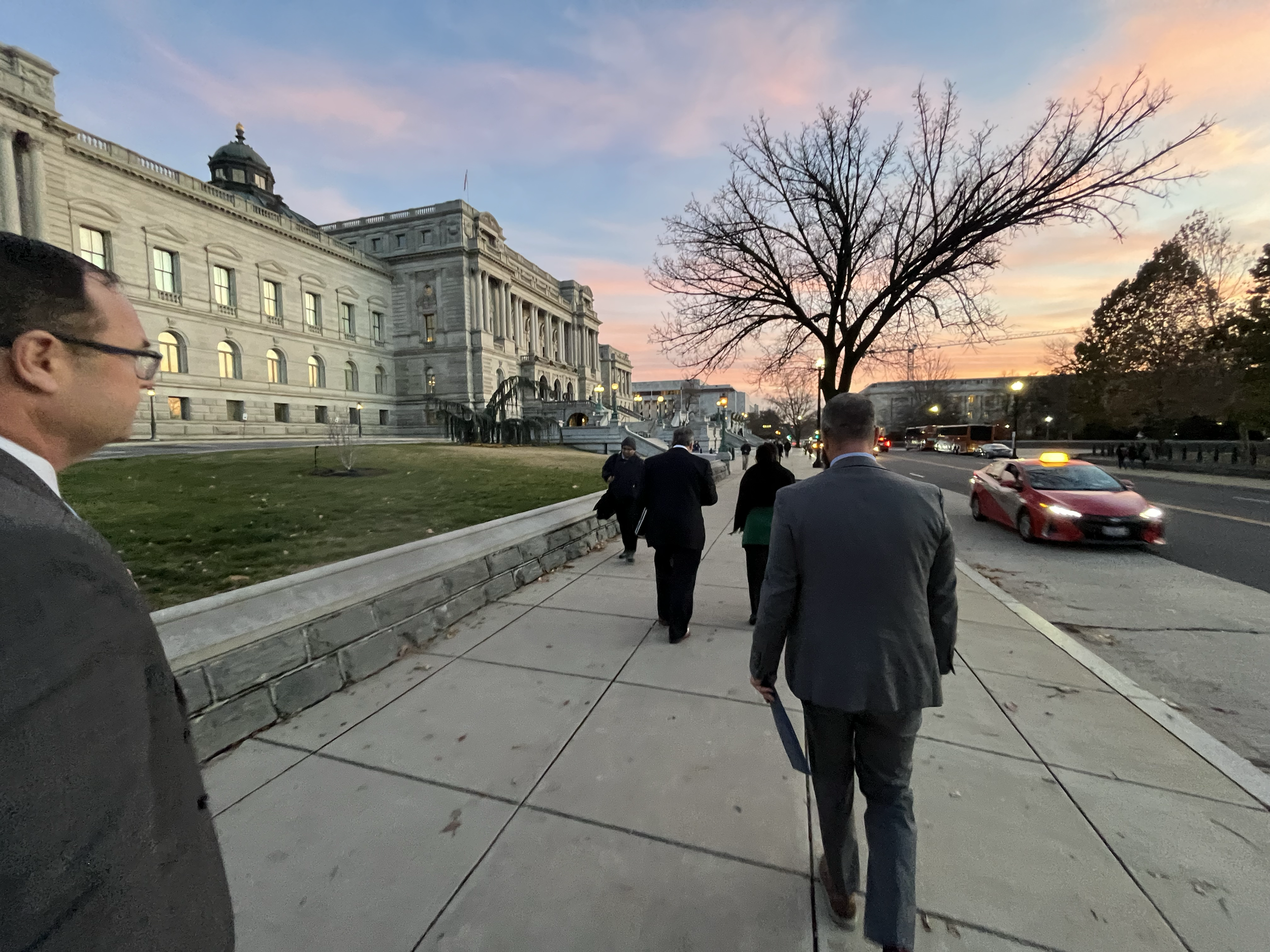
The Necessity of Public-Private Partnerships
Federal policy alone cannot transform agricultural conservation at national scale. Collaboration across sectors will be essential, which is why RIPE’s Approach also emphasizes public-private partnerships.
Private companies are increasingly investing in regenerative agriculture programs, sustainable sourcing initiatives, carbon market development, climate-smart commodity supply chains and more. And like farmers and ranchers, private companies are risk averse and don’t always fairly share the economic benefits produced by their customers. Federal policy frameworks that provide structure and replicable modeling gives these companies added confidence in investments in voluntary conservation and environmental outcomes. This is why RIPE’s theory of change emphasizes public policy and public-private partnerships - the former can establish sustainable, long-term support for the latter.
The time is ripe for producers to directly benefit from such investments, as they must be adequately compensated for the risks and direct costs associated with producing environmental benefits for themselves, and the public, if we want to truly scale conservation in this country. Federal policy can serve as the underlying foundation that aligns these efforts and establishes standards, ensuring equitable access for producers with operations of all sizes, across all geographies and commodities. John F. Kennedy is credited with the quote "the farmer is the only man in our economy who buys everything at retail, sells everything at wholesale, and pays the freight both ways." Sustainable federal policy frameworks and bipartisan support, coupled with public-private partnerships, can lighten some of the burden shouldered by farmers and ranchers. By reducing or removing such burdens, we can ensure a more sustainable approach to food and fiber production for generations to come.
The Road Ahead: Conservation as Core Agricultural Infrastructure
The future of agricultural land conservation will depend on whether policymakers treat conservation as a peripheral environmental initiative or as core agricultural infrastructure. Healthy soils, resilient ecosystems, and climate-adaptive farming systems are foundational to long-term food production and rural economic stability. Conservation is no longer separate from agricultural productivity, but is increasingly central to it.
Sustaining a federal policy focus on conservation means maintaining reliable funding streams, encouraging innovation, and strengthening public-private coordination. The scale of today’s agricultural challenges requires equally scaled policy commitment. With bipartisan support from federal leadership, conservation can move from isolated adoption to mainstream agricultural practice across millions of acres of American farmland.
Farmland conservation represents one of the most important opportunities to strengthen both environmental resilience and economic resilience in the years to come. Federal policy has already demonstrated its ability to drive meaningful conservation progress, but sustaining and scaling that progress will require long-term focus and investment.
The road ahead is not simply about increasing acreage enrolled in conservation programs. It is about building durable agricultural systems that can withstand economic volatility, climate stress, and resource pressures while continuing to feed a growing population. A sustained federal commitment to conservation is ultimately an investment in the future productivity, resilience, and sustainability of American agriculture.